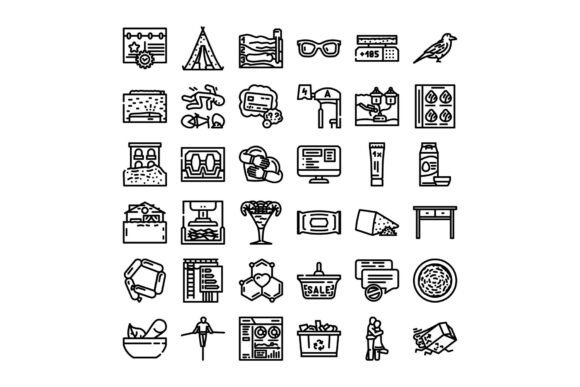
Outline Icons for Modern Digital Design
Designing intuitive and visually appealing digital interfaces often starts with the smallest details—like icons. A Collection of Outline Icons Illustrating offers a versatile and clean way to represent actions, ideas, and elements across websites, apps, and other digital platforms. These icons are typically crafted in a thin line style, making them easy to read while blending seamlessly into modern design systems.
What Makes Outline Icons Useful?
At their core, outline icons serve as visual shorthand. Instead of using text to explain every button or feature, designers can use a universally recognized symbol. For example, a magnifying glass icon immediately signals a search function, while a house icon often represents a homepage.
The thin line pictogram set is especially valuable because of its minimalistic style. It avoids visual clutter while still being expressive enough to convey meaning clearly. These icons are often scalable, meaning they look sharp on both mobile screens and large desktop displays.
Who Benefits from Using Outline Icons?
- Web and app developers who want clean, consistent visuals without reinventing the wheel
- Graphic designers building UI kits or branding materials
- Entrepreneurs launching new products and needing polished visuals quickly
- Educators and bloggers who use icons to enhance presentations or digital content
Whether you're a seasoned developer or just starting out, a well-organized set of outline icons can save time and improve the user experience of your digital projects.
How Can You Use Thin Line Icons in Real Projects?
One of the biggest strengths of the Collection of Outline Icons Illustrating is its adaptability. Here are a few realistic examples of how these icons can be applied:
- Navigation Menus: Use icons like a compass, calendar, or envelope to guide users through an app or website.
- Mobile App UI: Thin line icons work especially well in mobile interfaces where space is limited and clarity is essential.
- Infographics and Reports: Icons help break up text-heavy content and make data easier to digest visually.
- Dashboard Design: Icons for settings, notifications, and user profiles help users quickly understand and interact with a system.
Because these icons are typically vector-based, they can be resized and recolored without losing quality. This makes them ideal for responsive design, where the same icon might appear in different sizes or contexts.
Why Choose a Diverse Icon Set?
A thin line pictogram set that includes a wide variety of symbols ensures you’ll have the right icon for nearly any situation. Whether you need to represent a physical object like a camera or a more abstract concept like collaboration, a diverse library gives you flexibility.
This kind of variety is especially important for international audiences. Icons that are culturally neutral and easy to interpret help reduce confusion and support a more inclusive design.
Designing with Simplicity in Mind
Simple symbols for objects, activities, and UI elements are more than just visually pleasing—they're functional. A well-designed icon should be recognizable at a glance, even when viewed on a small screen or in a low-light environment.
When choosing icons from a collection, it’s important to look for consistency in stroke width, corner radius, and overall style. This ensures that all icons feel like they belong to the same visual family, creating a more cohesive user experience.
Where to Find and Use These Icons
Many Collection of Outline Icons Illustrating sets are available online through design marketplaces, UI kits, and open-source libraries. Some are free to use, while others require a license for commercial projects.
Designers often integrate these icons directly into tools like Figma, Sketch, or Adobe XD. Developers can export them as SVG or PNG files for use in web or mobile applications. Many sets also include documentation to help users implement icons correctly and consistently.
Important Considerations Before You Choose a Set
Before downloading or purchasing a collection, consider the following:
- License type: Make sure the icons can be used for your intended purpose, especially if you're working on a commercial product.
- Update frequency: Some icon sets are actively maintained, with new icons added regularly to keep up with design trends and new technologies.
- Compatibility: Check if the icons work well with your existing design system or framework.
- Customization options: Look for sets that allow easy color changes, resizing, and integration into your workflow.
Also, keep in mind that while icons are powerful, they shouldn’t stand alone in complex interfaces. Always pair them with text labels when necessary to avoid confusion.
How Outline Icons Improve User Experience
Icons are more than just decoration—they play a key role in usability. A clear, well-designed icon helps users navigate an app or website more efficiently. When users can recognize an icon and understand its function instantly, it reduces the learning curve and enhances satisfaction.
For example, a shopping cart icon in an e-commerce app tells users exactly where to go to review their purchases. A heart icon signals favorites or likes. These small visual cues make digital experiences smoother and more intuitive.
Making the Most of Your Icon Set
To get the best results from a thin line pictogram set, it helps to organize and manage your icons effectively. Here are a few tips:
- Use a design tool that supports icon libraries so you can easily search and insert icons.
- Create a style guide that outlines how and when to use specific icons in your project.
- Group icons by category (like navigation, social media, or file management) for easier access.
By treating your icon collection as part of your core design system, you ensure consistency across all your digital products.
Final Thoughts
A Collection of Outline Icons Illustrating is a powerful tool for anyone involved in digital design. Whether you're building a mobile app, designing a website, or creating educational content, these icons help communicate ideas clearly and efficiently. With their clean, modern look and wide range of applications, thin line pictograms are a smart choice for both beginners and experienced designers alike.