How a Diverse Set of Line Art Icons Enhances Design Workflows
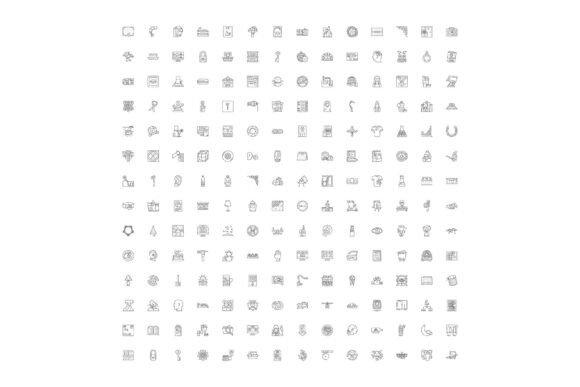
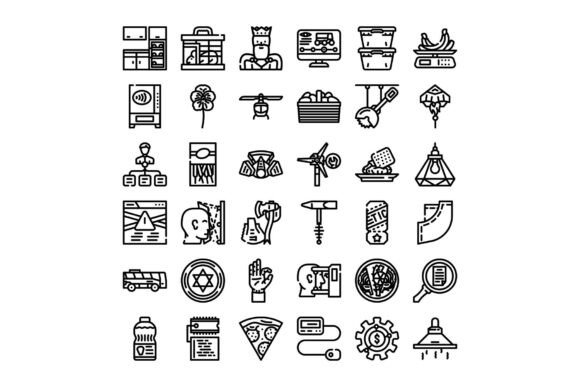
Designers, developers, and content creators often face the challenge of conveying complex ideas through minimal visual elements. A Collection of Diverse Line Art Icons provides a practical solution by offering simplified, scalable, and adaptable visuals across a wide range of industries and use cases. Whether you're building a website, designing an app interface, or preparing educational materials, these icons serve as essential building blocks that streamline the visual communication process.
Understanding the Role of Line Art Icons in Design
Line art icons are vector-based graphics created using thin strokes, typically without fill colors. This design approach allows for clarity, flexibility, and ease of customization. A diverse set of thin line icons includes representations of people, tools, environments, and abstract concepts, making them suitable for various digital and print applications.
These icons are especially valuable in projects where visual consistency and clarity are important. They reduce cognitive load by offering instantly recognizable symbols while maintaining a clean, modern aesthetic. Their vector format ensures they remain sharp at any size, which is crucial for responsive design and multi-platform compatibility.
Integration into the Design Workflow
The use of a well-organized icon set like the Collection of Diverse Line Art Icons can be integrated at multiple stages of a project. During the early planning phase, designers can use these icons as placeholders to map out interface layouts or content structures. This helps in visualizing the flow before committing to detailed design work.
- Before a project begins: Use icons to sketch wireframes or mockups for better stakeholder communication.
- During development: Incorporate icons into UI components to enhance usability and navigation.
- After launch: Update or expand visual elements without redesigning from scratch, thanks to the scalability and modularity of line art icons.
Compatibility and Tool Integration
One of the key strengths of this type of icon set is its compatibility with a variety of design and development tools. Whether you're working in Adobe Illustrator, Figma, Sketch, or a code-based environment like React or Flutter, these icons can be easily imported, edited, and styled to match your project's visual language.
Because they are vector-based, they can be resized without quality loss, and their thin-line style allows for easy color changes and layering. Designers can also combine multiple icons or integrate them with other graphic elements to create more complex visuals while maintaining consistency.
Practical Tips for Using Line Art Icons
- Establish a visual system: Define a consistent grid and stroke width across all icons used in your project to maintain uniformity.
- Organize your assets: Use naming conventions and folder structures that make it easy to locate and update icons as needed.
- Optimize for performance: When exporting icons for web use, choose SVG format for scalability and small file sizes.
- Customize strategically: Modify icons to align with your brand style, but avoid overcomplicating them with unnecessary details.
Use Cases Across Industries and Professions
The Collection of Diverse Line Art Icons is not limited to any single industry. Its broad subject coverage makes it a valuable resource for:
- Web and app developers who need intuitive navigation symbols
- Marketers and educators creating infographics or presentation materials
- Entrepreneurs and small business owners designing branded content for digital platforms
- Freelancers and creatives who need to maintain visual consistency across client projects
In each of these cases, the icons serve as visual shorthand that supports the message without overshadowing it. They also help reduce design time, allowing creators to focus on higher-level decisions and execution.
Long-Term Usability and Maintenance
When selecting a set of icons for ongoing use, consider not only the current project but also future needs. A well-structured diverse set of thin line vector icons should be expandable, allowing you to add new icons or variations as your brand or platform evolves.
Additionally, maintaining a centralized icon library helps ensure consistency across teams and projects. Consider using design systems or asset management tools to track usage, versioning, and updates. This approach supports long-term efficiency and reduces the risk of visual fragmentation over time.
Conclusion: Enhancing Visual Communication with Purpose
Incorporating a Collection of Diverse Line Art Icons into your design process is more than just a convenience—it's a strategic choice that supports clarity, efficiency, and scalability. Whether you're working independently or as part of a team, these icons offer a flexible foundation that adapts to changing needs and platforms.
By integrating them thoughtfully into your workflow, you can streamline design tasks, improve communication, and maintain a consistent visual identity across all your projects. As design trends evolve, having a reliable set of icons ensures you're always prepared to adapt without compromising quality or coherence.